System Description [12/2019 - 11/2023]
- CASES OF UNNECESSARY PARKING SUPPORT BRAKE SYSTEM OPERATION
- In the following situations, the parking support brake system may operate even when there is no possibility of a collision:
- Environmental influence
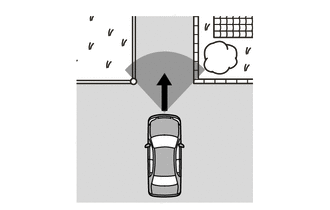
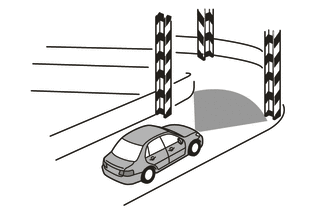
- There is an obstacle on the shoulder of the road (when the vehicle is driven in a narrow tunnel, on a narrow bridge or on a narrow road).
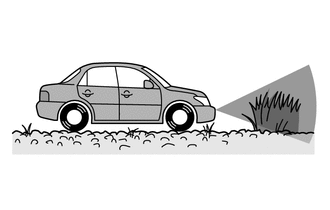
- The vehicle is being driven on grass or a gravel road.
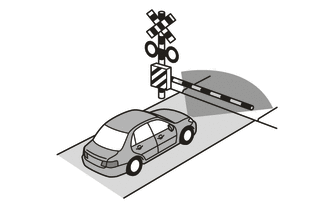
- The vehicle is driven toward a banner or flag, a low-hanging branch or a boom barrier (such as those used at railroad crossings, toll gates and parking lots).
HINT:
Even if the parking support brake system operates while on a railroad crossing, brake control will be automatically be canceled after approximately 2 seconds. Brake control can also be canceled by depressing the brake pedal. After brake control is canceled, depress the accelerator pedal to drive out of the railroad crossing.
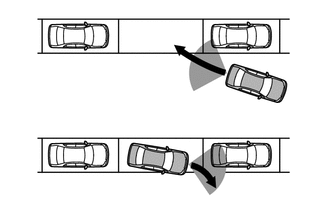
- The vehicle is close to other vehicles while being parallel parked.
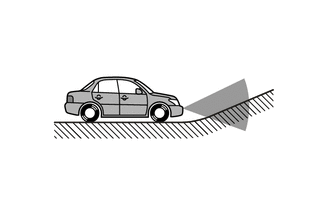
- The vehicle is being driven on a steep slope.
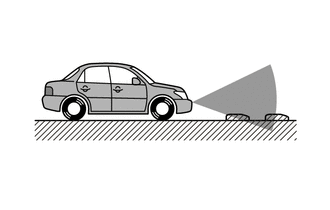
- There are objects located lower than the ultrasonic sensors.
- The vehicle is being driven on a narrow road.
- There is a rut or hole in the surface of the road.
- When the vehicle is driven on a metal cover (grating), such as those used for drainage ditches.
- There is an obstacle on the shoulder of the road (when the vehicle is driven in a narrow tunnel, on a narrow bridge or on a narrow road).
- Influence from the weather
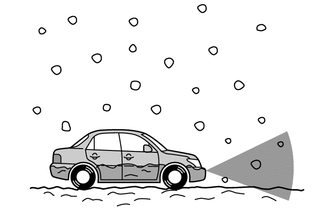
- In severe weather such as fog, snow or a sandstorm.
- Foreign matter such as snow, ice or mud is attached to an ultrasonic sensor. (The system returns to normal when the foreign matter is removed.)
- When there is a downpour, or water is splashing on the vehicle.
- Water is covering an ultrasonic sensor due to a flooded road.
- Influence from other ultrasonic waves
- When ultrasonic waves are received from the horn or parking sonar system of another vehicle, a motorcycle engine, or the air brakes of a large vehicle.
- Electronic components such as a backlit license plate (especially fluorescent types), fog lights, a fender pole or a wireless antenna are installed near an ultrasonic sensor.
- Changes in the vehicle.
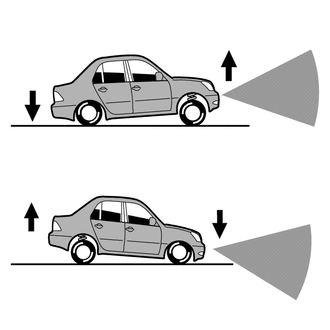
- The height of the vehicle has drastically changed due to loading (the nose tilts up or down).
- The vehicle is significantly tilted.
- An ultrasonic sensor is misaligned due to a collision, etc.
- Others
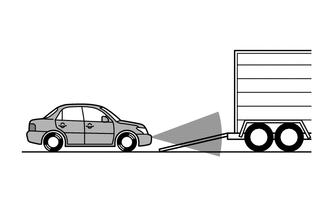
- The vehicle is being loaded onto a ship, truck or other transport vessel.
- The vehicle is being operated on a drum tester such as a speedometer tester, brake/speedometer combination tester or chassis dynamometer.
- When the vehicle is being towed.
- Environmental influence
- In the following situations, the parking support brake system may operate even when there is no possibility of a collision:
- CASES OF UNNECESSARY REAR CROSS TRAFFIC AUTO BRAKE FUNCTION OPERATION
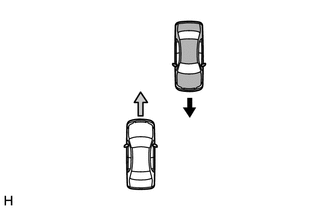
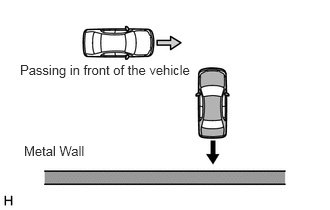
- In the following situations, the rear cross traffic auto brake function may operate even when there is no possibility of a collision:
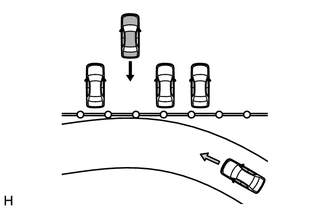
- When a vehicle is travelling along a road that is located extremely close to a parking space.
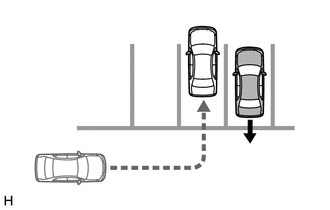
- When a vehicle is entering an adjacent parking space.
- When an object is passing extremely close to the vehicle.
- When there is a metal object behind the vehicle such as a guard rail, wall, traffic sign or parked vehicle that easily reflects radio waves.
- When a vehicle is travelling along a road that is located extremely close to a parking space.
- In the following situations, the rear cross traffic auto brake function may operate even when there is no possibility of a collision:
- MULTI-INFORMATION DISPLAY AND HEADUP DISPLAY (w/ Headup Display System)
- Parking support brake system display
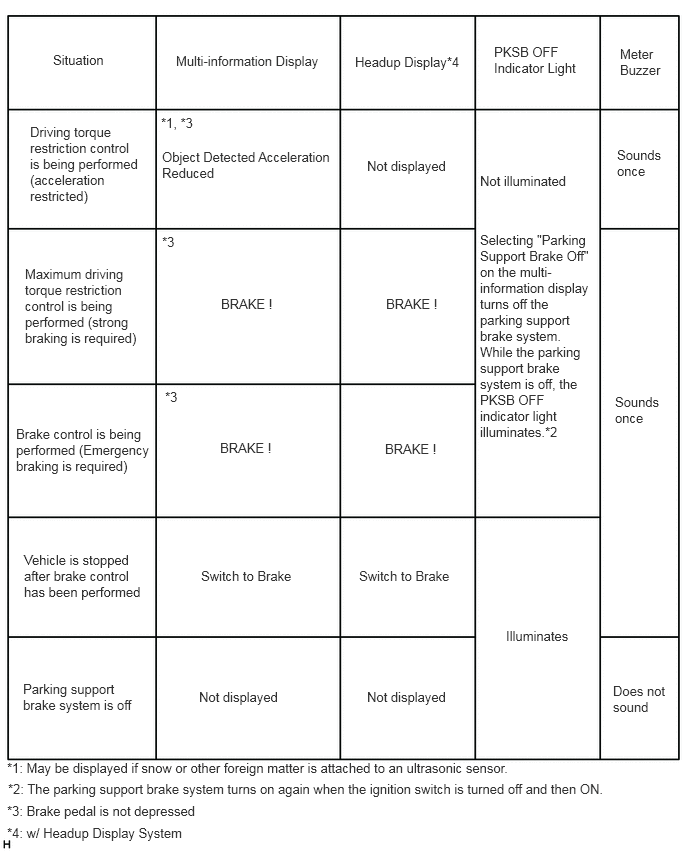
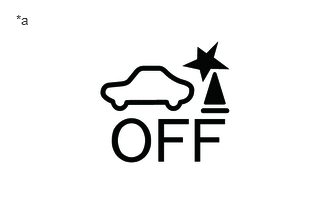
- The parking support brake system uses the multi-information display in the combination meter assembly, the meter mirror sub-assembly* and PKSB OFF indicator light to indicate the operation status of the system.
- Parking support brake system operation status display
- When the operation conditions are met, the clearance warning ECU assembly sends display or illumination request signals to the combination meter assembly, meter mirror sub-assembly* and PKSB OFF indicator light. The clearance warning ECU assembly also sends buzzer sound request signals to the combination meter assembly.
- *: w/ Headup Display System
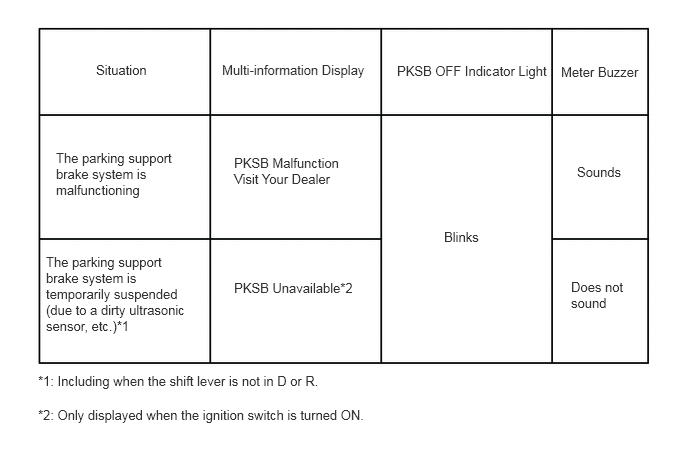
- Parking support brake system warning display
- When operation of the parking support brake system is temporarily suspended due to a malfunction or dirty ultrasonic sensor, a message is displayed on the multi-information display in the combination meter assembly, the PKSB OFF indicator light blinks and the buzzer sounds.
- Parking support brake system off display
- When the parking support brake system is off, the PKSB OFF indicator light illuminates.
*a PKSB OFF Indicator
- Parking support brake system display